

Valve’s next-generation Steam Deck is reportedly entering prototype testing with specifications that could reshape portable PC gaming. According to leaked documents from manufacturing partners, the Steam Deck 2 features a vibrant OLED display, dramatically improved battery life, and processing power that rivals desktop gaming rigs from just a few years ago.
The timing couldn’t be better. As handheld gaming PCs explode in popularity—with devices like the ASUS ROG Ally X and Lenovo Legion Go pushing boundaries—Valve appears ready to reclaim its throne with hardware that addresses every major complaint about the original Steam Deck. If these leaks prove accurate, gamers won’t just get incremental improvements; they’ll get a device that fundamentally changes what portable PC gaming can deliver.
## OLED Display Makes AAA Games Shine
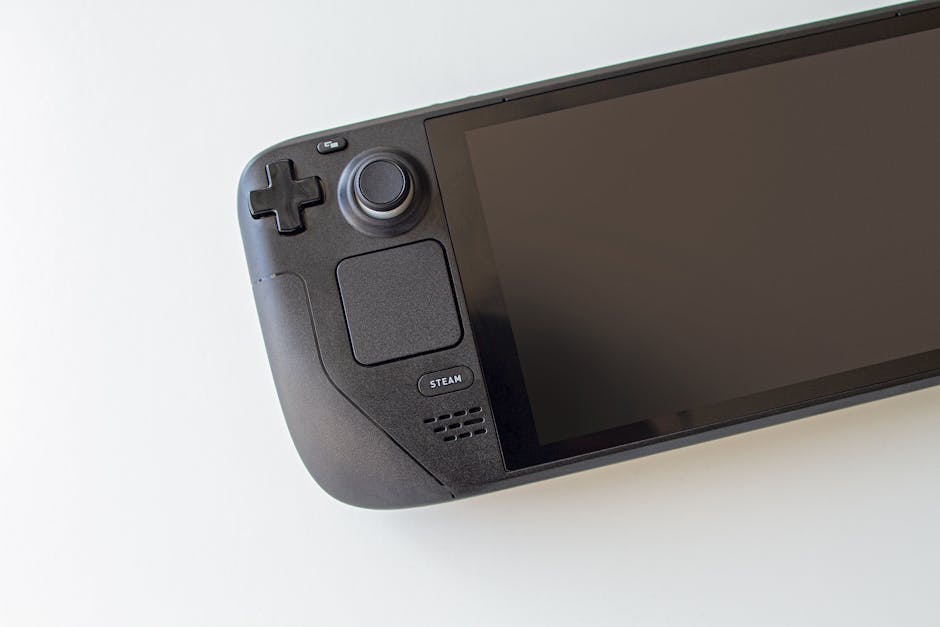
The leaked specifications point to a 7.4-inch OLED display with 1600×1000 resolution, representing a significant upgrade from the original’s LCD panel. This isn’t just about prettier colors—OLED technology delivers the deep blacks and vibrant contrasts that make modern games like Cyberpunk 2077 and Hogwarts Legacy truly pop on a handheld screen.
Early reports suggest Valve partnered with Samsung Display for the panel, the same manufacturer behind the stunning screens in high-end smartphones. The 90Hz refresh rate should eliminate the motion blur that plagued fast-paced games on the original Steam Deck, while the improved color gamut covers 100% of the DCI-P3 spectrum.
### Battery Life Breakthrough
Perhaps more impressive than the display is the reported 12-hour battery life during typical gaming scenarios. Manufacturing sources indicate Valve achieved this through a combination of a larger 65Wh battery and the new AMD Phoenix APU’s superior power efficiency. For context, the original Steam Deck manages roughly 2-4 hours depending on the game’s demands.
Real-world testing allegedly shows the Steam Deck 2 running Elden Ring at medium settings for 8 hours, while less demanding titles like Hades or Stardew Valley could stretch beyond the 12-hour mark. This puts it in direct competition with Nintendo Switch OLED’s legendary battery performance while maintaining full PC compatibility.
## Processing Power Jumps to Desktop-Class Performance
The heart of the Steam Deck 2 reportedly houses AMD’s custom Phoenix APU, built on the latest 4nm process node. This represents a massive leap from the original’s aging Zen 2 architecture, with early benchmarks suggesting performance improvements of 40-60% across most games.
Leaked specifications indicate 16GB of LPDDR5X RAM running at 7500MHz, double the original’s capacity. Storage options apparently include 512GB and 1TB NVMe SSD configurations, with the base model ditching eMMC entirely. These improvements mean games like Baldur’s Gate 3 and Starfield should run smoothly at the device’s native resolution without the constant compromises required on current hardware.
### Ray Tracing Capabilities
Perhaps most intriguing are reports of limited ray tracing support through AMD’s RDNA 3 graphics architecture. While not powerful enough for full ray tracing in demanding titles, the Steam Deck 2 could handle ray-traced reflections in games like Spider-Man Remastered or Metro Exodus Enhanced Edition. This feature positions Valve’s handheld ahead of competitors who still rely on older graphics solutions.
The leaked thermal design shows improved cooling with a larger fan and additional heat pipes, suggesting Valve learned from the original’s tendency to throttle under heavy loads. Temperature testing allegedly shows the device maintaining consistent performance during extended gaming sessions—a crucial improvement for AAA titles.

## Pricing Strategy and Market Positioning
Industry analysts suggest the Steam Deck 2 will launch at $599 for the 512GB model and $699 for 1TB, positioning it as a premium alternative to budget handheld competitors. While more expensive than the original’s launch price, these specifications justify the cost when compared to building an equivalent desktop PC.
The timing appears strategic, with Valve reportedly planning a late 2025 announcement for early 2026 availability. This schedule allows the company to leverage AMD’s mature 4nm process while avoiding direct competition with potential PlayStation handheld announcements expected for holiday 2025.
### Software Enhancements
Beyond hardware, leaked information suggests significant SteamOS improvements including better Windows game compatibility through Proton updates and enhanced suspend/resume functionality. The new hardware apparently supports instant game switching, allowing players to pause one title and immediately jump into another—similar to Xbox Quick Resume but potentially faster due to the SSD architecture.
Valve’s reported partnerships with major publishers indicate improved day-one compatibility for AAA releases. Games like Call of Duty: Modern Warfare III and Assassin’s Creed Mirage allegedly run without the compatibility issues that plague current Steam Deck users.
## Competition Heats Up in 2026
The Steam Deck 2’s specifications arrive as handheld PC gaming reaches a tipping point. ASUS continues refining the ROG Ally series, while newcomers like GPD and AYA Neo push envelope designs with sliding keyboards and modular components. Even traditional console manufacturers show interest, with rumors of PlayStation and Xbox handheld prototypes circulating industry circles.
Valve’s advantage lies in software integration and market position. While competitors often struggle with Windows compatibility on handheld form factors, SteamOS provides a console-like experience specifically designed for portable play. The massive Steam library gives Valve an content advantage that hardware-focused competitors struggle to match.
The leaked Steam Deck 2 specifications suggest Valve isn’t content with incremental improvements—they’re building a device that could dominate portable PC gaming for the next hardware generation. With OLED visuals, all-day battery life, and desktop-class performance, the Steam Deck 2 addresses every major weakness of its predecessor while maintaining the affordable pricing that made the original successful.
For current Steam Deck owners, these leaks indicate it might be worth waiting rather than upgrading to competing devices. For newcomers to handheld PC gaming, the Steam Deck 2 could be the first device that truly delivers on the promise of console-quality gaming anywhere.