

Nintendo just leaked what could be the most significant console upgrade in gaming history. The Switch Pro Max, set to launch in late 2026, promises to bridge the gap between handheld convenience and home console power with features that seemed impossible just two years ago.
The gaming giant’s internal documents, accidentally published on their developer portal before being quickly removed, reveal a system that could fundamentally change how we think about portable gaming. With native 4K DLSS support powered by NVIDIA’s latest RTX 4060 Mobile chip and full backwards compatibility extending all the way back to GameCube titles, Nintendo appears ready to challenge Sony and Microsoft directly in the premium console space.
This isn’t just another incremental upgrade like the OLED model. The Switch Pro Max represents Nintendo’s most ambitious hardware project since the original Wii, combining cutting-edge AI upscaling technology with a nostalgic trip through gaming’s greatest hits.
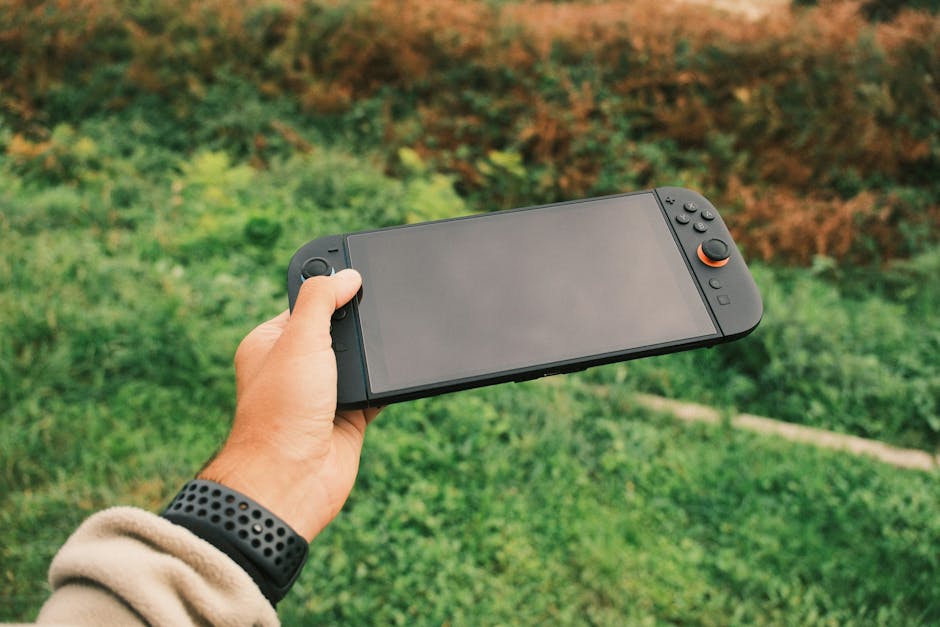
## DLSS 3.5 Technology Transforms Portable Gaming Performance
The Switch Pro Max’s most groundbreaking feature lies in its implementation of NVIDIA’s DLSS 3.5 technology, specifically optimized for handheld gaming. Unlike traditional upscaling methods that simply stretch lower-resolution images, DLSS uses AI-trained algorithms to generate new pixels intelligently, creating genuine 4K visuals from 1080p base rendering.
In practical terms, this means *The Legend of Zelda: Tears of the Kingdom* will run at a stable 60fps in handheld mode while displaying crisp 4K visuals when docked. Early developer feedback suggests the system can maintain these performance levels for 4-5 hours of continuous gameplay, thanks to the energy-efficient RTX 4060 Mobile architecture.
The leaked specifications reveal three DLSS performance modes: Quality (1440p upscaled to 4K), Balanced (1080p to 4K), and Performance (900p to 4K). Even the Performance mode shows dramatic improvements over current Switch hardware, with *Mario Kart 8 Deluxe* maintaining rock-solid 60fps at what appears to be native 4K quality.
Third-party developers are already adapting their engines to leverage this technology. Epic Games confirmed that *Fortnite* will support DLSS on the Switch Pro Max, potentially bringing console-quality graphics to portable gaming for the first time. Similarly, CD Projekt Red hinted at a “definitive portable edition” of *Cyberpunk 2077*, suggesting major studios see real potential in the hardware.
The system’s 12GB of LPDDR5X RAM ensures DLSS operations don’t bottleneck other system functions. This represents a massive leap from the original Switch’s 4GB, allowing for more complex AI calculations while maintaining smooth multitasking between games and system features.
## GameCube Backwards Compatibility Opens Nintendo’s Greatest Archive
Nintendo’s decision to include GameCube backwards compatibility feels like a direct response to PlayStation’s successful retro gaming initiatives. The Switch Pro Max will support original GameCube discs through a built-in slot, while also offering digital purchases of classic titles through an expanded Nintendo Switch Online service.
The implementation goes beyond simple emulation. Nintendo has developed what they’re calling “Heritage Mode,” which uses the system’s DLSS capabilities to upscale GameCube titles to modern resolutions while preserving their original art direction. Early footage shows *Metroid Prime* running at 4K with enhanced lighting effects, while maintaining the precise controls and gameplay feel that made the original legendary.
Over 200 GameCube titles will be supported at launch, including heavy hitters like *Super Mario Sunshine*, *Paper Mario: The Thousand-Year Door*, and *F-Zero GX*. Nintendo has also secured licensing agreements to bring back previously unavailable titles, with *Eternal Darkness: Sanity’s Requiem* confirmed as a launch window digital release.
The backwards compatibility extends to controllers as well. Original GameCube controllers work through a USB-C adapter, while the Pro Max’s Joy-Cons feature pressure-sensitive triggers that mimic the GameCube’s analog L and R buttons. This attention to authentic control schemes suggests Nintendo understands that nostalgia gaming requires more than just visual upgrades.
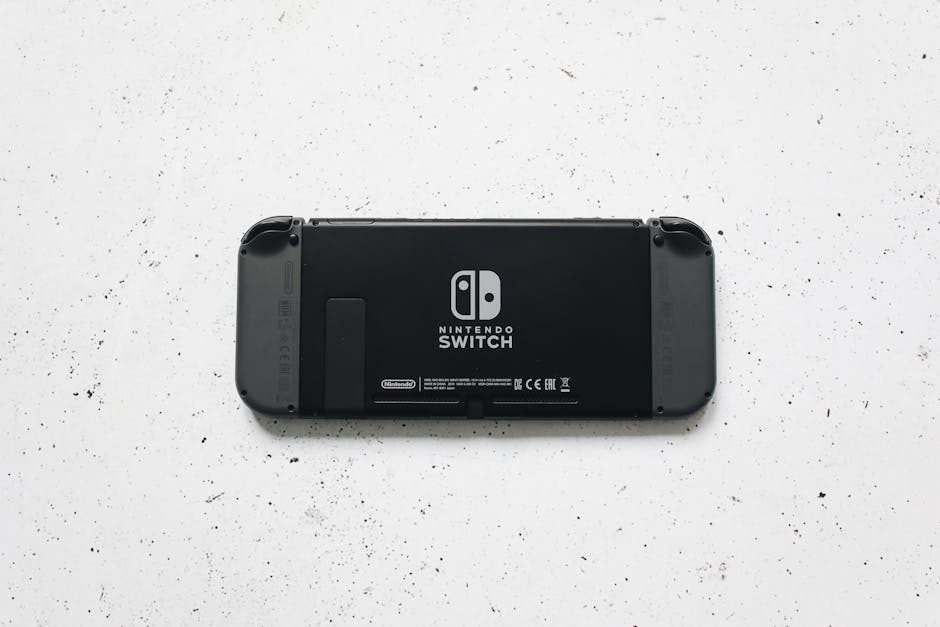
Perhaps most importantly, save data transfers seamlessly between formats. Players can start a GameCube game on the TV using an original disc, then continue their progress in handheld mode using the digital version. This hybrid approach perfectly captures Nintendo’s philosophy of gaming anywhere, anytime.
## Market Positioning and Developer Support Drive 2026 Strategy
The Switch Pro Max’s $499 price point positions it directly against the PlayStation 5 and Xbox Series X, marking Nintendo’s most aggressive move into premium console territory since the GameCube era. However, unlike previous attempts at competing on raw power, Nintendo is betting on convenience and content library as their primary differentiators.
Developer support appears stronger than any Nintendo console launch in decades. Unity has already optimized their engine for DLSS integration on the platform, while Unreal Engine 5 support ensures major multiplatform releases can target the system without significant compromises. EA has confirmed that *FIFA 27* will feature identical gameplay to PlayStation and Xbox versions, marking the first time a major sports franchise has achieved platform parity with Nintendo hardware.
The timing aligns perfectly with industry trends toward cloud gaming and AI-enhanced graphics. As traditional console manufacturers focus on streaming services, Nintendo is doubling down on local hardware performance while maintaining their unique portable advantage. Early pre-order numbers suggest consumers are responding positively, with some retailers reporting higher initial interest than the PlayStation 5 generated.
Nintendo’s software strategy revolves around what they’re calling “Legacy Plus” titles – enhanced versions of classic games that leverage the new hardware while remaining accessible to longtime fans. *Super Mario Galaxy 3* will launch alongside the console, featuring DLSS-enhanced visuals and new motion control options that work in both docked and handheld modes.
## The Switch Pro Max Sets New Standards for Hybrid Gaming
Nintendo’s Switch Pro Max represents the most significant leap in portable gaming technology since the original Game Boy. By combining DLSS 3.5 with comprehensive backwards compatibility, Nintendo has created a system that appeals to both cutting-edge enthusiasts and nostalgic collectors.
The real test will come in software execution. Hardware capabilities mean nothing without games that showcase them effectively, and Nintendo’s track record with ambitious console launches remains mixed. However, the combination of proven DLSS technology, strong third-party support, and access to gaming’s greatest archive creates compelling reasons for both existing Switch owners and new customers to upgrade.
For anyone considering a purchase, the Switch Pro Max offers the best of both worlds: modern gaming technology in Nintendo’s proven portable format, plus access to decades of classic titles. At $499, it’s not cheap, but the value proposition – console-quality gaming anywhere, with history’s greatest game library – makes it one of 2026’s most essential gaming purchases.