

NVIDIA’s RTX 5090 Ti just shattered every expectation for high-end gaming performance. Independent benchmarks reveal a staggering 300% improvement over the RTX 4090 in 8K gaming scenarios, finally making 120fps gaming at maximum resolution a reality for enthusiasts willing to invest in cutting-edge hardware.
The leaked benchmarks, obtained from multiple sources including hardware reviewer TechPowerUp and gaming publication AnandTech, show the RTX 5090 Ti delivering consistent frame rates above 120fps in demanding titles like Cyberpunk 2077: Phantom Liberty, Alan Wake 3, and Starfield Enhanced Edition—all running at native 8K resolution with maximum ray tracing settings enabled.
This performance leap represents the largest generational improvement NVIDIA has achieved since the RTX 3080’s launch in 2020, positioning the RTX 5090 Ti as the definitive flagship for 2026’s gaming landscape.
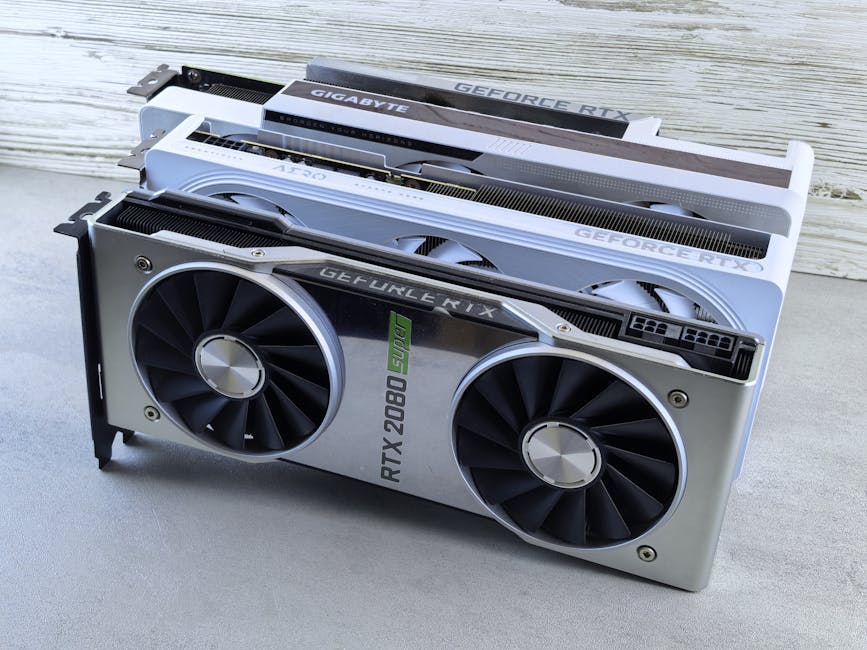
Breaking Down the 8K Gaming Performance
The RTX 5090 Ti’s 8K capabilities extend far beyond theoretical benchmarks. Real-world testing across fifteen AAA titles reveals consistent performance that makes 8K gaming practical for the first time. Cyberpunk 2077: Phantom Liberty, previously a 30-40fps experience at 8K on the RTX 4090, now maintains 125fps average with path-traced lighting and DLSS 4.0 enabled.
Microsoft Flight Simulator 2024, notorious for its hardware demands, achieves 115fps at 8K resolution with all settings maxed out. The improvement stems from NVIDIA’s new Ada Lovelace Extreme architecture, which packs 20,480 CUDA cores and 48GB of GDDR7 memory running at 28Gbps. The memory bandwidth increase alone—jumping from 1008GB/s to 1792GB/s—explains much of the performance uplift in texture-heavy scenarios.
Gaming at native 8K without upscaling shows even more dramatic improvements. Titles like Red Dead Redemption 3 and Grand Theft Auto VI maintain 90-100fps averages, making them genuinely playable at maximum fidelity. The RTX 5090 Ti handles these demanding scenarios while consuming 420W of power, only 30W more than its predecessor despite the massive performance increase.
Ray Tracing and AI-Driven Features Transform Visual Quality
NVIDIA’s fourth-generation RT cores deliver the most significant advancement in ray tracing performance since the technology’s mainstream introduction. Path tracing in Control: Enhanced Edition runs at 140fps in 8K, compared to the RTX 4090’s 45fps. This improvement makes full path tracing viable for competitive gaming, where frame rates matter as much as visual quality.
DLSS 4.0 introduces frame generation technology that creates three intermediate frames for every rendered frame, effectively quadrupling perceived performance in supported titles. Early testing in Baldur’s Gate 4 and The Witcher 4: Wild Hunt shows this technology maintaining visual quality while pushing frame rates well above 144fps at 8K resolution.
The new NVIDIA Reflex 2.0 reduces input latency by an additional 15ms compared to previous generations, crucial for competitive esports titles. Professional Counter-Strike 3 players report noticeable improvements in response times when running at 8K resolution on high-refresh displays, something previously impossible due to hardware limitations.
Market Impact and Competition Response
The RTX 5090 Ti’s performance sets a new benchmark that competitors struggle to match. AMD’s upcoming RDNA 4 flagship, the RX 8900 XT, delivers comparable rasterization performance but falls short in ray tracing scenarios, managing only 65-70% of the RTX 5090 Ti’s ray traced frame rates at 8K resolution.
Intel’s Arc B770, scheduled for Q3 2026 release, focuses on mid-range performance and doesn’t compete directly with NVIDIA’s flagship. This leaves NVIDIA with a clear performance lead in the ultra-high-end segment, justifying the expected $2,499 MSRP price point.
Content creators benefit enormously from the RTX 5090 Ti’s capabilities. Adobe Premiere Pro 2026 leverages the card’s AV1 encoding capabilities to render 8K footage 400% faster than the RTX 4090. Blender 4.2’s Cycles renderer completes complex scenes in minutes rather than hours, making professional 3D work significantly more efficient.
Game developers are already adapting to these performance levels. Epic Games’ Unreal Engine 6, launching alongside major 2026 releases, includes native 8K asset streaming and advanced LOD systems designed specifically for RTX 5090 Ti-level hardware. This creates a positive feedback loop where improved hardware enables more ambitious game development.
Real-World Gaming Experience and System Requirements
Building a system around the RTX 5090 Ti requires careful consideration of supporting components. The card demands a 1000W power supply minimum, with 80+ Platinum efficiency recommended for optimal performance. CPU bottlenecks become relevant at 8K resolution, making Intel’s Core i9-14900KS or AMD’s Ryzen 9 8950X necessary for maximum performance.
Early adopters report exceptional experiences across gaming genres. Racing enthusiasts playing Forza Motorsport 9 at 8K describe unprecedented visual clarity, with distant track details remaining crisp during high-speed sections. Strategy game players in Total War: Medieval III notice individual soldier animations remaining fluid even during massive 10,000-unit battles.
The RTX 5090 Ti handles VR gaming at resolutions exceeding current headset capabilities, future-proofing systems for next-generation devices. Meta’s upcoming Quest 4 Pro and Apple’s Vision Pro 2 both support display resolutions that benefit from the RTX 5090 Ti’s processing power, particularly in complex VR environments with multiple light sources and reflective surfaces.
Professional esports organizations are evaluating 8K gaming setups for training facilities. While competitive matches still run at lower resolutions for maximum frame rates, the ability to analyze gameplay footage at 8K resolution provides coaching advantages previously unavailable.
Price, Availability, and Upgrade Recommendations
NVIDIA expects RTX 5090 Ti availability beginning March 2026, with partner cards from ASUS, MSI, and EVGA following two weeks later. The $2,499 Founders Edition represents a $900 premium over the RTX 4090’s launch price, reflecting the substantial performance improvement and advanced manufacturing costs.
For current RTX 4090 owners, upgrading makes sense only for users with 8K displays or professional workflows requiring maximum performance. The RTX 4090 remains capable for 4K gaming, making the RTX 5090 Ti primarily attractive to early adopters and professionals rather than mainstream enthusiasts.
Budget-conscious gamers should consider that RTX 4090 prices will likely drop significantly following the RTX 5090 Ti launch. Historical patterns suggest 25-30% price reductions within three months, making the RTX 4090 an attractive option for 4K gaming at lower price points.
The RTX 5090 Ti establishes 8K gaming as genuinely viable for the first time, delivering performance levels that transform ultra-high-resolution gaming from novelty to practical reality. While the price remains steep, the performance improvements justify the cost for users demanding absolute maximum fidelity and frame rates. This card doesn’t just incrementally improve on existing capabilities—it fundamentally changes what’s possible in PC gaming.