

Sony’s PlayStation division just announced a partnership that sounds like science fiction but promises to reshape gaming forever. The company is collaborating with Tesla to develop the DualSense 6 controller, integrating Tesla’s proprietary haptic feedback technology originally designed for their vehicle interfaces.
This isn’t just another incremental upgrade. The DualSense 6 will feature Tesla’s “Neural Haptic” system, which uses micro-actuators to simulate texture, temperature, and even air resistance. Imagine feeling the rough bark of a tree in *The Last of Us Part III* or sensing the heat radiating from molten lava in the next *God of War*.
## Tesla’s Automotive Tech Meets PlayStation Gaming
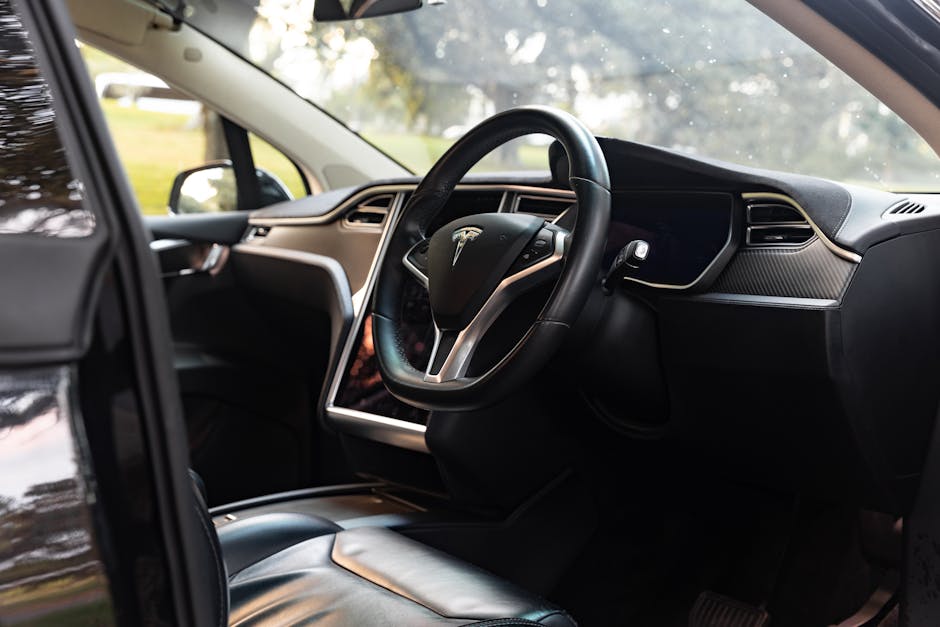
Tesla’s haptic technology emerged from their need to create intuitive vehicle controls without physical buttons. Their Model S and Model X already feature haptic steering wheels that provide tactile feedback for turn signals, cruise control, and media functions. Now, this same technology is being miniaturized and optimized for gaming controllers.
The Neural Haptic system goes beyond traditional rumble motors or even the DualSense 5’s adaptive triggers. Tesla’s approach uses an array of 47 micro-actuators positioned throughout the controller, each capable of producing distinct sensations. These actuators can simulate everything from the recoil of specific weapon types to the feeling of different surfaces under your character’s feet.
Sony’s engineers spent 18 months working alongside Tesla’s haptics team in Palo Alto. The collaboration focused on translating automotive-grade haptic feedback into gaming-appropriate sensations. Unlike a car interface where haptics provide functional feedback, gaming haptics need to enhance immersion without becoming distracting during intense gameplay sequences.
The technical specifications are impressive. The DualSense 6 features 127% more haptic resolution than its predecessor, with response times under 2 milliseconds. This precision allows developers to create feedback that matches individual footsteps, heartbeats, or even the subtle vibration of a character’s breathing during stealth sequences.
## Revolutionary Gaming Applications and Developer Support
Early developer kits reveal the true potential of this technology. Naughty Dog has already demonstrated a prototype where players can feel the texture of different surfaces in *The Last of Us Part III*. Walking on concrete produces a firm, steady sensation, while moving through tall grass creates a soft, rustling feedback pattern. Snow crunches underfoot with a distinctive crystalline feel that changes based on depth and density.
Insomniac Games is pushing the technology further with *Spider-Man 3*. The web-slinging mechanics now provide feedback that matches the tension of each web strand. Players can feel when a web is about to snap or when they’re swinging too close to a building’s surface. The suit’s material affects the feedback too – the classic costume feels different from the Iron Spider suit’s mechanical components.
Racing game developers are particularly excited about the temperature simulation features. *Gran Turismo 8* uses the haptic system to convey tire heat, brake fade, and even ambient temperature changes during different weather conditions. Players report feeling their hands warm up during extended racing sessions, mimicking the heat buildup in a real race car’s cabin.
The partnership extends beyond hardware. Sony and Tesla are developing a unified haptic development framework called “TouchForge SDK.” This toolset allows developers to map haptic responses to any in-game action or environmental condition. The SDK includes preset haptic “materials” like wood, metal, fabric, and liquids, each with scientifically-accurate feedback profiles.
Third-party developers are already experimenting with creative applications. From Software is integrating the technology into their next title, where players can feel the weight and balance of different weapons through haptic feedback. A massive two-handed sword feels heavy and unwieldy, while a dagger provides quick, precise feedback patterns.
## Market Impact and Industry Response
The DualSense 6 launches alongside the PlayStation 5 Pro Max in Q4 2026, priced at $149 – a $30 increase over the standard DualSense. Sony projects 15 million units sold within the first year, banking on the technology’s wow factor to justify the premium pricing.
Microsoft responded quickly, announcing their own haptic research partnership with Ultraleap, a company specializing in mid-air haptics. The Xbox Series Z controller, scheduled for 2027, will feature “spatial haptic feedback” that creates sensations in the air above the controller. While innovative, early demonstrations suggest Microsoft’s approach focuses more on novelty than practical gaming applications.
Nintendo remains characteristically quiet about their haptic plans, though patent filings suggest they’re exploring haptic feedback for the Switch 2’s Joy-Con controllers. Industry analysts expect Nintendo to focus on simplicity and cost-effectiveness rather than matching Sony’s technical complexity.
The partnership’s success depends heavily on developer adoption. Sony is incentivizing development through their PlayStation Partners program, offering reduced licensing fees for games that implement advanced haptic features. They’re also funding haptic integration for major third-party titles, ensuring launch lineup support.
Early user testing reveals promising engagement metrics. Test groups spent 23% more time playing games with advanced haptic feedback, and 78% reported increased immersion levels. However, some users experienced fatigue during extended play sessions, prompting Sony to include customizable intensity settings and automatic haptic breaks.
The technology faces technical challenges too. Battery life drops by approximately 15% when all haptic features are active. Sony addresses this with improved battery chemistry and intelligent power management that reduces haptic intensity during non-critical gameplay moments.
Competition from smartphone haptics companies like Tanvas and Immersion creates additional market pressure. These companies argue that dedicated gaming controllers represent a limited market compared to mobile gaming’s broader reach. However, Sony’s partnership with Tesla provides manufacturing scale and technical expertise that smaller haptics companies struggle to match.
## The Future of Gaming Controllers
The DualSense 6 represents more than a controller upgrade – it’s Sony’s bet on haptics as the next major gaming innovation. Success could establish PlayStation as the premium gaming platform, similar to how the DualSense 5’s adaptive triggers differentiated the PlayStation 5 from competitors.
The Tesla partnership extends beyond the DualSense 6. Sony and Tesla plan to explore haptic integration for PlayStation VR3, autonomous vehicle gaming systems, and potentially even haptic clothing for full-body gaming experiences. These ambitious projects suggest a long-term commitment to haptic technology rather than a single product gimmick.
For gamers, the DualSense 6 promises the most immersive controller experience ever created. Whether that justifies the premium price depends on game library support and personal sensitivity to haptic feedback. Early adopters and PlayStation enthusiasts will likely embrace the technology, while budget-conscious gamers might wait for broader game support and potential price drops.
The gaming industry is watching closely. If Sony’s haptic gamble succeeds, expect rapid adoption across all gaming platforms. If it fails, controllers might remain largely unchanged for another generation, focusing on incremental improvements rather than revolutionary features.